
How can I ensure on-time delivery when buying tea packaging from China?
Delays in tea packaging orders from China can disrupt your launch schedules, affect your Amazon listings, and leave your production line waiting for packaging that should have arrived weeks earlier. The truth is, on-time delivery doesn’t happen automatically—you must engineer it. In this guide, you’ll learn how to anticipate delays, protect your deadlines, and keep every shipment of tea pouches, paper tubes, and laminated roll stock on schedule. Ready to keep your supply chain moving without surprises? Let’s begin.
Understanding Delivery Delays
Why On-Time Delivery Is Hard When Importing from China
When sourcing tea packaging from China, two timelines matter—the manufacturing schedule and the logistics schedule. Both can derail your plans if not managed correctly.
Manufacturing delays often come from unclear specifications, last-minute artwork changes, material shortages, and missed curing times for laminated structures. On the logistics side, customs holds, port congestion, and seasonal holiday shutdowns can push your timeline back by weeks.
Many importers underestimate how much these factors compound. A one-day delay in printing can become a two-week delay at the port. A slight miscommunication can turn into a missed shipping vessel. Understanding these risks upfront helps you build a reliable workflow and avoid costly surprises.
Credible supply chain sources, such as McKinsey, note that a lack of visibility and weak supplier communication are among the top causes of global delivery delays.
External reference: https://supplychains.com/supply-chains-still-vulnerable-are-companies-letting-their-guard-down/#:~:text=Global%20supply%20chains%20remain%20vulnerable,the%20fragility%20of%20supply%20networks.
Let’s break down how to stay ahead of these risks.
What lead time should I expect for printed pouches?
Printed tea pouches—especially multilayer laminated structures—require multiple steps: design confirmation, cylinder engraving or digital plate setup, printing, lamination, curing, slitting, and bag forming.
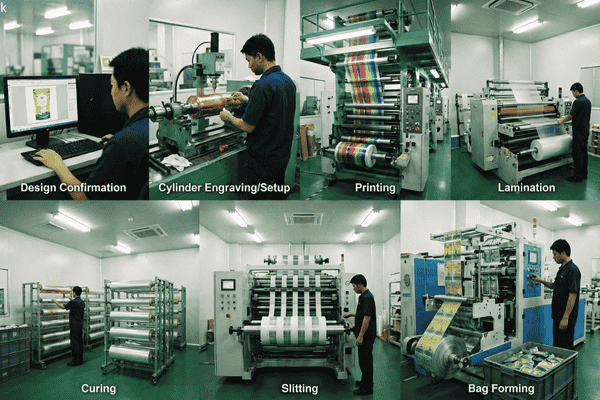
Typical Lead Times for Tea Packaging
| Packaging Type | Standard Lead Time | Main Bottlenecks |
|---|---|---|
| Printed Stand-Up Pouches | 4–8 weeks | Lamination curing (48–72 hrs) |
| Paper Tubes | 6–10 weeks | Glue drying & mold setup |
| Tin Canisters | 8–12 weeks | Tooling, stamping, surface treatment |
| Roll Stock Films | 2–5 weeks | Material sourcing, lamination |
Necessary: Avoid China’s Holiday Blackouts
Chinese holidays can stop production for weeks, especially:
- Chinese New Year (Jan–Feb) → 3–4 weeks shutdown
- International Labor Day holiday (May 1-5) → 5-7 days
- China’s National Day (Oct 1–7) → Full week closure + port congestion
Always ask your supplier if your order overlaps these dates.
External reference: https://publicholidays.sg/chinese-new-year/
Key Buyer Tip
Never change artwork or packaging specifications during production. Even a small change can reset your queue and affect your confirmed delivery date.
How can I track production progress remotely?
Most delays happen because the buyer assumes progress, but production hasn’t started. Remote visibility is the only way to control timelines.

A Simple but Effective Tracking Workflow
| Stage | What to Request | Why it Matters |
|---|---|---|
| Raw Material Prep | Photos of printed film or paper rolls | Confirms real production start |
| Mid-Production | Videos of lamination or pouch forming | Detects early problems |
| Pre-Shipment | Third-party QC report | Confirms quality before final payment |
| Logistics | Bill of Lading or tracking number | Confirms vessel departure |
Trusted tracking tools
Platforms like 17Track or major forwarder portals provide real-time updates.
External reference: https://www.17track.net
Perhaps you might find this interesting
Learn more about choosing the right materials for your packaging inside our guide to tea & coffee packaging.
Should I include delivery deadlines in my contract?
Yes—without a written delivery clause, suppliers treat deadlines as estimates. A proper contract turns your timeline into an enforceable commitment.
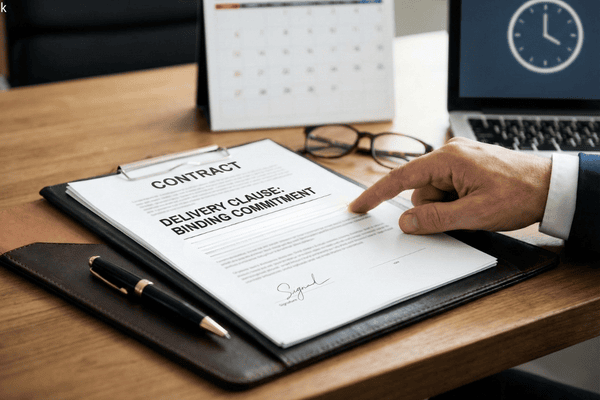
What Your Delivery Clause Should Include
1. A clear definition of the delivery date
Specify:
“Delivery Date = Date of loading + Bill of Lading issued.”
2. Production milestones
- Start date
- Mid-production review date
- Final goods ready date
3. Penalties for late shipment
This is the only clause suppliers respect consistently.
Sample Late Penalty Clause
“For every week of delay beyond the delivery date, supplier agrees to a 1% deduction from the total order value, capped at 10%.”
Perhaps you might find this interesting
Explore structured packaging specifications in our overview of roll stock materials.
What penalties apply for late shipment?
Penalties (also known as liquidated damages) protect your timeline and reduce your financial risk. They also motivate the supplier to prioritize your order over lower-value orders.

Common Penalty Types
| Penalty Type | How It Helps | When to Use |
|---|---|---|
| % Deduction per Week | Supplier bears financial loss | Most common & effective |
| Refund of Deposit | Protects you from total loss | For new suppliers |
| Free Reprint / Reproduction | Supplier covers cost | For printing delays |
| Order Priority Guarantee | Supplier increases manpower | During peak season |
Can penalties be enforced in China?
Yes—but you must include them in a signed contract. Many foreign importers have successfully recovered deposits and payments through the local Administration for Market Regulation (AMR).
External reference: https://www.chinajusticeobserver.com
Your supplier will take your deadlines seriously once the terms are written and tied to payments.
Conclusion
Ensuring on-time delivery of tea packaging from China requires clear deadlines, formal contracts, mid-production visibility, and strict QC checks. With the right structure in place, you can protect your schedule, your product quality, and your brand reputation—without stressful surprises or missed launch dates.