
Conclusion
Choosing the right tea bag wrapper material depends first on your machine’s sealing method—heat seal or cold seal—then on matching material thickness, barrier properties, and structure to ensure stable production and freshness.
How to Choose the Right Tea Bag Wrapper Material for Different Packaging Machines?
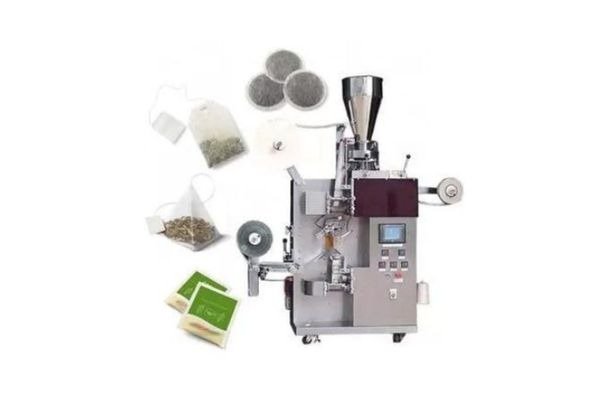
I’ve seen too many tea brands order beautiful wrapper material only to watch it jam, burn, or fail on the production line. The root cause is almost always the same: the material was chosen for its look, not for the machine it needs to run on.
Selecting the right tea bag wrapper material is not just about barrier performance or printing quality—it starts with understanding your packaging machine’s sealing method, temperature range, and speed. A mismatch as small as 0.01mm in film thickness can cause seal failures, machine stoppages, and costly downtime. The correct approach is to match material structure to machine type first, then optimize for shelf life and aesthetics.
That claim might sound extreme, but it’s backed by real production experience. In the sections below, I’ll explain exactly why machine type dictates material choice, how heat seal and cold seal applications require different structures, and what buyers need to verify before placing an order—all supporting the conclusion above.
Why Machine Type Matters When Choosing Tea Bag Wrapper Material?
I’ve learned this lesson firsthand: high-quality materials don’t automatically mean practical solutions. What truly matters is stable performance. Compatibility with the packaging machine is the most critical factor in this process.
Each tea packaging machine—whether it’s a vertical form fill seal (VFFS) machine, a horizontal form fill seal (HFFS) machine, or a traditional sealing machine—has its own specific sealing method, temperature range, and speed profile. As such, packaging materials must operate within these precise parameters.
The most significant and avoidable mistake in sourcing tea packaging materials is to choose them based solely on price or barrier properties without confirming their compatibility with the machine. Ensuring that your materials align with your equipment is essential for successful packaging operations.
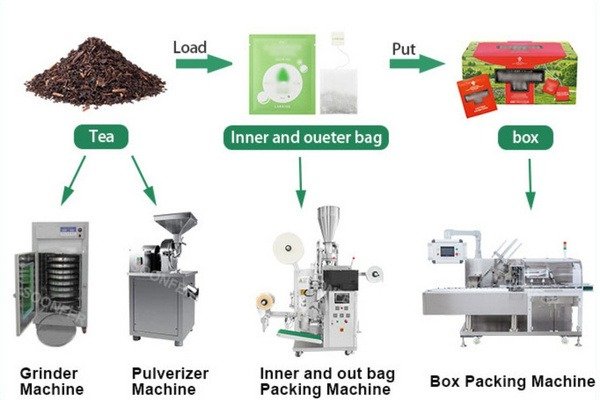
The first question: Is your machine heat seal or cold seal?
Before comparing material structures, barrier ratings, or supplier prices, buyers must answer one fundamental question: Does your machine use heat sealing or cold sealing?
Cold seal machines use mechanical pressure—crimping or pressing—to close the wrapper. Traditionally, these machines ran plain paper with no coating. Today, most cold seal materials apply a pattern-coated adhesive (often called “frame coating”) to the paper surface. This coating serves two purposes: it prevents the paper from tearing under mechanical pressure, and it improves bond strength at the seal point. Typical cold seal machines include older European enveloping models (such as the IMA C21 and C24 series, Constanta, and Maisa legacy lines) as well as certain high-speed crimp-seal systems designed for sachet production. These machines are still widely used across the UK, continental Europe, and parts of South Asia where installed bases remain large.
Heat seal machines use heated jaws or bars to melt a sealant layer—typically PE, CPP, or PLA—creating a bond as the material cools. Heat seal is the dominant method in modern packaging lines. Common heat seal machines include modern VFFS systems (such as Syntegon/Bosch SVE series, Viking Masek Comet, and Hayssen ISB), HFFS flow wrappers (such as ULMA Atlanta, Rovema BVC, and Ilapak Delta), and integrated inner-outer tea bag machines with heat seal jaws (such as IMA C27 and Teepack Constanta Nova). The material must have a sealant layer with a melting point that falls within the machine’s temperature range, typically 80°C to 180°C depending on the structure.
There is also a third category worth noting: ultrasonic seal machines. Some integrated inner-outer bag systems (such as the IMA C23 with ultrasonic module, or Fuso pyramid machines) use ultrasonic vibration instead of heat to bond materials. These machines require specially engineered nonwoven materials (like PO3-series substrates) that respond to ultrasonic energy rather than thermal activation. Buyers running ultrasonic equipment must never assume that standard heat-seal wrappers will work.
According to the Flexible Packaging Association, over 75% of new tea packaging lines installed globally since 2022 use heat-seal technology, making material-machine temperature matching a critical procurement skill.
How different machine types demand different material properties
Each machine type imposes specific physical demands on the wrapper material.
| Machine Type | Example Machines | Sealing Method | Key Material Requirement |
|---|---|---|---|
| VFFS (Vertical Form Fill Seal) | Syntegon SVE, Viking Masek Comet, Hayssen ISB | Longitudinal + transverse heat seal | Good stretch orientation, wide heat-seal temperature window |
| HFFS (Horizontal Flow Wrapper) | ULMA Atlanta, Rovema BVC, Ilapak Delta | Continuous heat seal with rotary jaws | Consistent COF, high hot-tack strength |
| Traditional Enveloping | IMA C21/C24, Constanta, Maisa | Crimp/fold + heat or cold seal | Excellent dead-fold property, high tensile strength |
| Inner + Outer Integrated | IMA C27, Teepack Constanta Nova | Heat seal or ultrasonic seal | Ultrasonic-compatible nonwoven (PO3 series) or heat-seal film |
| Pyramid Bag Specialist | Fuso, IMA C23 Pyramid Module | Heat seal or ultrasonic seal | Inner: PLA/Soilon/nylon mesh; Outer: per VFFS/HFFS principles |
Thickness tolerance: When a 0.01 mm Change Can Affect the Whole Packaging Process
Thickness is one of the most easily overlooked factors when choosing tea bag wrapper material. Many buyers describe it in broad terms, such as “around 70 microns” or “standard gauge.” However, in real production, even a 0.01 mm difference can affect sealing performance, machine speed, and overall stability.
I have seen this happen in an actual tea packaging project. A U.S. customer had been using a wrapper structure with a total thickness of 0.07 mm, and the machine was running well. Later, to reduce cost, they changed the material from CPP to OPP, and the thickness increased to 0.085 mm. After that change, the sealing performance became unstable. They increased the sealing temperature from the normal 150–160°C to 180°C, but the problem remained.
The reason was simple: OPP has a higher melting point, and the added thickness made heat transfer less efficient during the available sealing time. In other words, the heat could not reach the sealant layer quickly enough. We solved the issue by adjusting the total thickness and adding a modified easy-seal coating to the OPP sealant layer. After that, the machine returned to normal speed, and the packaging result became stable again.
This example shows an important lesson: when you change resin type, thickness, or layer structure, even slightly, you should test the material on the actual machine before confirming mass production. A small change on paper can create a big difference on the production line.
What Material Structures Work Best for Heat Seal and Cold Seal Applications?
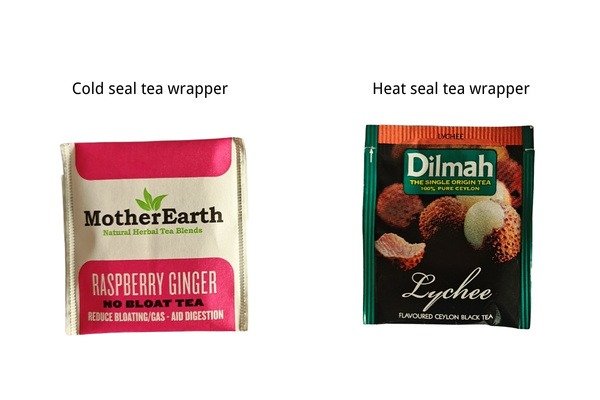
Different sealing systems require different material structures. I’ve tested dozens of material combinations across different sealing systems, and the structure that works perfectly on one machine can fail completely on another. Understanding which laminations suit which sealing method saves months of trial and error.
For heat seal applications, the most reliable tea bag wrapper structures are Paper/PE, PET/PE, and PET/VMPET/PE—each offering different barrier levels while providing consistent melt-seal performance between 100°C and 160°C. For cold seal applications, pattern-coated kraft paper or paper with cold-seal adhesive coating delivers clean mechanical bonds without heat, protecting delicate teas from thermal damage while maintaining line speeds above 200 units per minute.
Heat seal structures: matching sealant to temperature window
Heat seal wrappers work because the innermost layer—the sealant—melts under the machine’s heated jaws, flows slightly, and bonds to the opposing sealant layer as it cools. The key variables are:
- Sealant melting point: Must fall within the machine’s temperature range
- Hot-tack strength: The seal must hold before it fully cools, especially on high-speed lines
- Seal initiation temperature: The lowest temperature at which an acceptable seal forms
Here are the most common heat-seal structures for tea bag wrappers:
| Structure | Heat Seal Range | Barrier Level | Best Application |
|---|---|---|---|
| Paper / PE (15–25μm) | 110–150°C | Low–Medium | Economy single-serve sachets, short shelf life |
| Paper / AL (7μm) / PE (20μm) | 120–160°C | Very High | Premium teas, export, long shelf life (12–24 months) |
| PET (12μm) / PE (30–50μm) | 120–160°C | Medium | Transparent or semi-transparent wrappers |
| PET (12μm) / VMPET (12μm) / PE (30μm) | 110–150°C | High | High-barrier without full aluminum, good for retail display |
| BOPP (20μm) / CPP (25μm) | 130–160°C | Medium | Cost-effective transparent flow wraps for HFFS machines |
| PLA heat-seal filter paper | 80–120°C | Medium | Compostable/eco-friendly sachets on VFFS lines |
Whether the sealant layer is applied through lamination (dry or solvent-free bonding of two separate films) or extrusion coating (melting PE directly onto the substrate), the end result must be a sealant that activates cleanly within the machine’s temperature window.
One important note about BOPP/CPP structures: as the Davidson’s Tea case showed, replacing CPP with OPP can significantly change thermal behavior. OPP has a higher crystallinity than CPP, which raises its effective melting point and stiffens the film. On a machine calibrated for BOPP/CPP at 150–160°C, an OPP substitution may require temperatures above 180°C to achieve the same seal—temperatures that most tea wrapper machines cannot sustain without damaging adjacent layers or slowing the line.
Cold seal structures: mechanical bonding without heat
Cold seal wrappers rely on pressure-activated adhesives rather than melted sealant layers. The adhesive is typically applied in a pattern—frame coating around the seal area only—rather than covering the entire surface.
Common cold seal structures include:
- Kraft paper + cold-seal adhesive coating: The traditional option for machines like the IMA C21 and older Constanta envelopers. The adhesive activates under pressure from the machine’s crimping jaws. Modern coatings improve bond strength and prevent paper fiber tearing compared to the uncoated paper that was standard a decade ago.
- Glassine paper + cold-seal coating: Provides a smoother, more premium surface finish while maintaining cold-seal compatibility. Often used for luxury tea brands that want an elegant wrapper appearance.
- Coated paper with release varnish: Some cold-seal formulations are “self-wound,” meaning the adhesive only bonds to itself. A release varnish on the non-seal side prevents the roll from sticking during unwinding on the machine.
Cold seal is particularly useful for:
- Machines that cannot reach or control precise heat-seal temperatures
- Products where heat exposure could damage volatile flavor compounds (certain green teas, white teas, and floral herbal blends)
- Very high-speed lines (250+ packs per minute) where dwell time is too short for reliable heat sealing
The lamination vs. extrusion coating decision
How the sealant layer is applied matters almost as much as what the sealant is.
Lamination bonds two pre-made films together using adhesive. It provides excellent layer uniformity and allows combining very different materials (paper + aluminum foil + PE, for example). However, laminated structures can be slightly thicker and stiffer.
Extrusion coating melts PE or PP directly onto a paper or film substrate. It’s faster and can produce thinner sealant layers, but offers less control over barrier uniformity. For tea bag wrappers where the sealant layer needs to be very thin (15–25 microns), extrusion coating is often preferred because it keeps the total structure within tight thickness tolerances that machines like the Syntegon SVE or Hayssen ISB demand.
For buyers unsure which method suits their machine, understanding flexible packaging cost structures and material options provides a useful framework for evaluating lamination versus coating trade-offs.
How to Match Tea Bag Wrapper Material with Sealing Performance and Running Stability?
I always tell clients: a wrapper that seals perfectly at zero speed means nothing if it jams at production speed. Matching material to machine requires testing under real conditions, not just reading spec sheets.
Running stability depends on three measurable properties: Coefficient of Friction (COF) for smooth material feeding, seal initiation temperature for consistent bonding, and material stiffness for clean cutting and forming. Testing these properties on your actual machine—at your target speed—is the only reliable way to confirm compatibility before committing to a full production order.
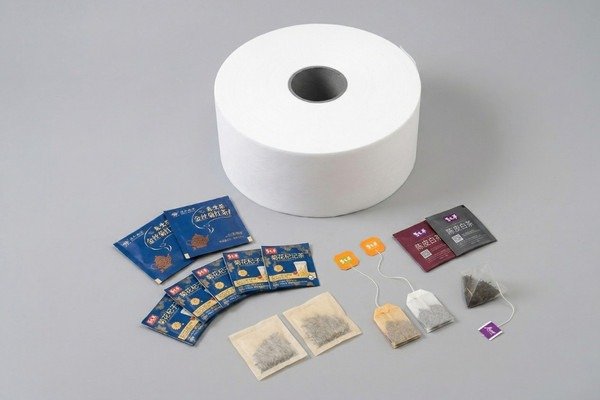
COF: the invisible performance killer
Coefficient of Friction measures how easily the film slides over machine surfaces—forming tubes, guide rollers, sealing jaws, and cutting blades. Tea bag wrapper material needs a COF sweet spot:
- Too high (grippy): The film drags, causing jams, misregistration, and uneven seal placement
- Too low (slippery): The film tracks poorly, drifts sideways, and produces crooked seals
For VFFS machines like the Syntegon SVE or Viking Masek Comet, the target COF for tea bag wrappers is typically 0.20–0.35 (film-to-metal). For HFFS flow wrappers like the ULMA Atlanta or Rovema BVC, which pull film over forming collars at higher speeds, a slightly lower COF of 0.15–0.25 is preferred. Our experience suggests that a coefficient of friction between 0.20 and 0.22 is suitable for the vast majority of packaging machines on the market.
Most film suppliers can adjust COF by adding slip agents during extrusion or applying surface treatments. Always specify your machine type and model when requesting material samples so the supplier can optimize COF accordingly.
Seal strength testing: the numbers that matter
Seal strength is measured in Newtons per 15mm width (N/15mm). For tea bag wrappers, minimum acceptable seal strength depends on the application:
| Application | Minimum Seal Strength | Why |
|---|---|---|
| Individual sachet (no vacuum) | 1.5–2.0 N/15mm | Must survive handling, stacking, and shipping |
| Nitrogen-flushed sachet | 2.5–3.5 N/15mm | Must hold internal pressure without peeling |
| Envelope-style wrapper (cold seal) | 1.0–1.5 N/15mm | Lower stress, but must resist accidental opening |
| Pyramid bag outer wrapper | 1.5–2.5 N/15mm | Needs to withstand retail display handling |
PLA heat-seal filter papers typically achieve 1.6–1.8 N/15mm, according to testing data from Ahlstrom-Munksjö’s technical specifications for fiber-based tea packaging materials. This is adequate for standard sachets but may be insufficient for nitrogen-flushed applications where higher seal integrity is required.
The machine trial protocol: how to validate before ordering
Never commit to a full production order based on lab data alone. Run a structured machine trial following this protocol:
Step 1: Set machine to recommended baseline. Start with the material supplier’s recommended temperature, pressure, and speed settings. For heat-seal wrappers, begin at the lower end of the recommended temperature range and increase in 5°C increments. For cold-seal machines, start at the manufacturer’s recommended crimp pressure and adjust gradually.
Step 2: Run 500–1,000 units at target speed. Don’t test at slow speed. Material behavior changes at production speed because dwell time decreases and mechanical stress increases. If your Syntegon SVE runs at 120 bags per minute in normal production, test at 120 bags per minute—not 60.
Step 3: Inspect for these specific defects:
- Scorching or discoloration at seal area (temperature too high)
- Incomplete or peeling seals (temperature too low or dwell time too short)
- Wrinkling or puckering along the seal line (tension imbalance or material stiffness mismatch)
- Film tracking errors or registration drift (COF problem or width tolerance issue)
- Tearing at perforation or cut points (material too brittle or blade alignment off)
- Paper fiber tearing at crimp points (cold-seal adhesive insufficient or pressure too high)
Step 4: Pull samples for seal strength testing. Take 10–15 sealed pouches from the trial run and test peel strength on a tensile tester. Compare results against your minimum specification from the table above.
Step 5: Conduct a leak test. Submerge sealed pouches in water under 20 kPa vacuum for 30 seconds. Any bubbles indicate seal failure. For nitrogen-flushed tea packaging, also check residual oxygen levels using a headspace analyzer. Target residual O₂ should be below 2% for premium loose-leaf and below 3% for standard sachets.
The Davidson’s Tea lesson: why real-world testing is non-negotiable
The Davidson’s Tea case I described earlier is a perfect example of why machine trials matter. On paper, OPP seemed like a reasonable substitute for CPP—both are polypropylene-based, both are technically heat-sealable. But the 0.015mm thickness increase and OPP’s higher crystallinity changed the material’s thermal behavior enough to make the existing seal parameters completely inadequate. Only a machine trial at production speed would have caught this before a full order was placed.
The solution—reducing thickness and adding an easy-seal modifier to the BOPP layer—was only possible because we understood both the machine’s constraints and the material science. When the adjusted material went back on the line, sealing temperature dropped back to the original 150–160°C range, the machine maintained full speed, and seal strength actually improved compared to the original CPP. This is why working with a supplier who offers customized material development, not just standard catalog products, is critical for tea brands running complex packaging lines.
What Buyers Should Check Before Ordering Tea Bag Wrapper Material from a Supplier?
I’ve reviewed hundreds of wrapper material quotes over the years, and the ones that lead to production problems almost always share the same gaps. A few simple checks before ordering can prevent months of frustration.
Before placing a tea bag wrapper material order, buyers must confirm five critical specifications with their supplier: exact material structure and layer composition, total thickness with tolerance (±0.005mm), verified heat-seal or cold-seal temperature range, COF values for both film-to-film and film-to-metal surfaces, and food-contact compliance certificates for the destination market. Missing any one of these invites production failures and costly material returns.
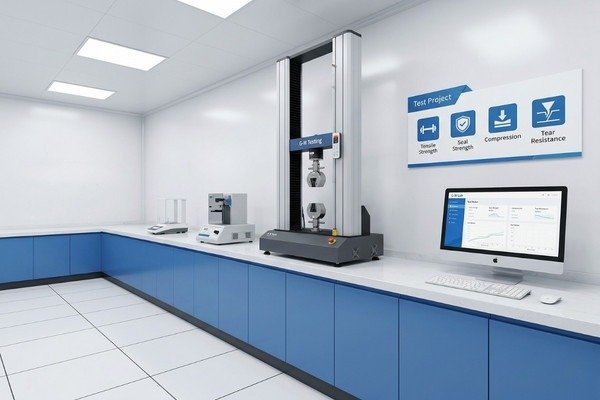
The pre-order specification checklist
Use this checklist before approving any tea bag wrapper material order. Every line item should be confirmed in writing—not verbally—before production begins.
| Specification Item | What to Confirm | Why It Matters |
|---|---|---|
| Material structure | Full layer breakdown (e.g., PET 12μm / VMPET 12μm / PE 30μm) | Prevents “similar material” substitutions that change performance |
| Total thickness | Exact number ± tolerance (e.g., 70μm ± 5μm) | Even 0.01mm deviation affects sealing and machine feeding |
| Sealant type | PE, CPP, PLA, or cold-seal adhesive | Determines compatible sealing temperature range |
| Heat-seal temperature range | Verified range (e.g., 120–155°C) | Must fall within your machine’s capability |
| COF (inner/outer surface) | Target values for film-to-metal and film-to-film | Controls feeding stability and tracking accuracy |
| Barrier properties | OTR (cc/m²/day) and WVTR (g/m²/day) | Determines shelf life for your specific tea type |
| Food-contact compliance | FDA 21 CFR, EU 10/2011, or destination market regulation | Legal requirement; non-compliance risks product recall |
| Roll specifications | Width, core diameter, winding direction, splice policy | Must match your machine’s unwind station exactly |
| Printing compatibility | Surface energy (dyne level), ink adhesion test results | Ensures artwork adhesion without delamination |
| MOQ and lead time | Minimum order per SKU, production lead time | Affects inventory planning and cash flow |
Red flags that signal a problematic supplier
Be cautious if a wrapper material supplier:
- Quotes without asking about your machine type, model, or sealing method
- Describes material as “food grade” without providing specific compliance certificates
- Cannot provide COF test data or seal strength curves
- Offers only one thickness option with no customization capability
- Has no experience supplying tea packaging specifically (tea wrapper requirements differ significantly from snack or coffee packaging)
- Cannot provide reference customers running similar machines
- Refuses to supply trial rolls for machine testing before bulk orders
Ask for a production specification sheet, not just a price
The most important document in tea bag wrapper procurement is not the quotation—it’s the production specification sheet. This document should list every measurable property of the material, signed and agreed upon by both buyer and supplier before production begins.
Without this document, any dispute about material performance becomes a “he said, she said” situation. With it, there is a clear, objective standard against which to measure delivered goods.
According to ISO 21067-1:2016, which covers the testing and analysis methods for the seal strength of flexible packaging, standardized test procedures ensure that both parties use the same measurement methods. However, note that this standard only “defines” what constitutes a “seal,” “heat seal,” or “flexible packaging”; detailed inspection standards for specific items are another story.
Choosing wrapper material based on tea type and shelf life
Machine compatibility comes first, but once that’s confirmed, the next decision is barrier level. Different tea products have very different sensitivity to moisture and oxygen.
| Tea Type | Shelf Life Target | Recommended Wrapper Structure | Why |
|---|---|---|---|
| Fannings/dust (standard teabags) | 6–12 months | Paper/PE or PLA heat-seal paper | Adequate moisture barrier; cost-effective |
| Whole-leaf premium tea | 12–18 months | Paper/AL/PE or PET/VMPET/PE | Needs full oxygen and moisture barrier to protect volatile oils |
| Organic/certified green tea | 12–24 months | PET/AL/PE with nitrogen flush | Extremely sensitive to oxygen and light; maximum barrier required |
| Herbal/fruit blends | 8–12 months | BOPP/CPP or PET/PE | Medium barrier; transparency for retail shelf appeal |
| Matcha or fine powder | 12–18 months | Paper/AL/PE or AL/PE pouch | Hygroscopic; needs very low WVTR |
Tea absorbs moisture and oxidizes faster than most dry foods. If the tea is produced in a humid climate or shipped long distances across climate zones, always choose a higher barrier structure than the minimum specification suggests.
Evaluating suppliers for customization capability
Standard catalog materials work for some tea brands, but many production lines require customized solutions. When evaluating a supplier’s customization capability, ask:
- Can they adjust sealant layer thickness in 5-micron increments?
- Do they offer trial rolls (500–1,000 meters) for machine testing before full production?
- Can they modify COF, seal initiation temperature, or stiffness to match a specific machine model?
- Do they have an in-house lab for seal strength, barrier, and COF testing?
- Have they worked with the specific machine brand you’re running (Syntegon, IMA, ULMA, etc.)?
For brands managing multiple tea SKUs across different packaging lines, working with a converter who understands both material science and machine engineering dramatically reduces the trial-and-error cycle and prevents the costly mistakes that come from treating wrapper material as a commodity purchase.
Why XLD is built for this exact challenge
At XLD, we specialize in tea bag wrapper materials engineered for specific machines—not generic films that “should work.” Our technical team starts every project by understanding your sealing method (heat, cold, or ultrasonic), temperature range, line speed, and pouch format. From there, we develop or customize a material structure that runs reliably at your target speed.
Whether you need paper/AL/PE for a high-barrier sachet on an IMA enveloper, PET/CPP for transparent flow wraps on an ULMA HFFS line, or a modified sealant layer for a machine that won’t cooperate with standard materials—like the solution we created for Davidson’s Tea—we provide trial rolls, machine-side technical support, and full production specification documentation before you commit to a bulk order.
Struggling with seal failures, machine jams, or wrapper material that doesn’t match your line? Fill out our inquiry form with your machine type, current material structure, and the issues you’re facing. Our engineering team will recommend a matched tea bag wrapper material and ship sample rolls for your machine trial—so you can validate real performance before placing your production order.