flexible packaging manufacturer

When Does Digital Printing for Flexible Packaging Make Sense — and When Doesn’t It?

Contents

When Does Digital Printing for Flexible Packaging Make Sense — and When Doesn’t It?

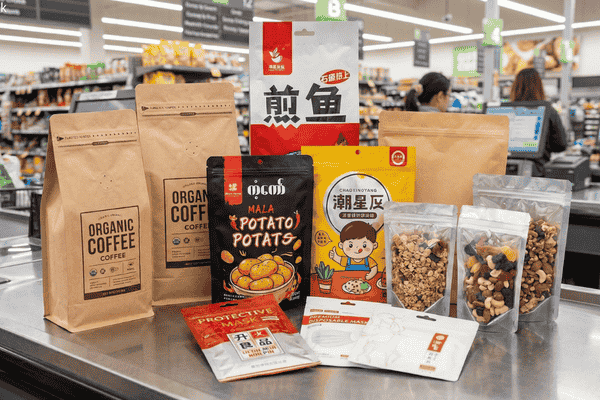
Flexible packaging products printed using different methods, including digital printing and gravure printing, showing variations in color, finish, and production scale.
Packaging is produced using different printing technologies. The packaging display effect may be similar, but digital printing and gravure printing should be used to serve different order volumes and business needs.

I’ve seen many brands rush to adopt digital printing for flexible packaging, only to be deterred by unit costs, color variations, or material limitations, ultimately preventing their products from launching successfully. I hate seeing budgets wasted.

Digital printing is best suited for small-batch production, rapid time-to-market, and diversified product lines with frequent updates, as it avoids plate-making costs and reduces inventory buildup. However, for stable, high-volume production and applications with stringent requirements for spot colors or special effects, gravure or flexographic printing remains a more economical and reliable solution.

Next, I will demonstrate a simple decision-making process based on real data, actual risks, and a workflow that balances speed and profit: When should digital printing be used, and when should it not?


Why Digital Printing Isn’t Always the Best Choice for Flexible Packaging?

I often encounter buyers who believe that “digital printing” automatically means “better,” but this isn’t necessarily true. The costs associated with it can usually be avoided entirely.

In fact, digital printing isn’t always the best choice. As print runs increase, the unit cost remains high, and specific substrate requirements, surface treatments, and durability needs still align better with flexographic or gravure printing. Digital printing’s advantages lie in its low setup costs, quick plate changes, and high SKU flexibility, but it falls short in terms of economy and strict color repeatability for long-term, high-volume printing.

Comparison of digital printing and flexographic printing on coffee stand up pouches, showing slight color and detail differences using the same artwork.
Even with identical artwork and colors, digital printing and flexographic printing can produce subtle differences in tone, gradients, and texture.

Digital printing is indeed a relatively new technology, and people naturally assume that the latest technology is the best, making it easy to treat it as the “default option.” However, I don’t see it that way; I see it as a tool. I only choose it when business issues involve low volume, speed, variety, and cost control.

What people forget: packaging is a system, not a picture

When I evaluate digital printing for flexible packaging, I do not only ask, “Does the artwork look good?” I ask:

  • Does the ink bond well after lamination?
  • Will the printed web run well on slitting and pouch making?
  • Will the pouch run on the customer’s filling line without scuffing or blocking?
  • Will the final pack meet food-contact and migration rules in the target market?

If any of these aspects fail, that’s a risk. And we hate risk.

The real trade: setup cost vs. running cost

Digital printing typically eliminates the cost of plate making or rollers. This is its advantage. However, digital printing also incurs higher costs and is generally slower.

I like to explain this with a simple concept: consider production as a whole operation. Digital printing saves costs at the start of the operation, while traditional printing saves costs during the operation.

FactorDigital printingFlexo / Gravure
Setup cost (plates/cylinders)Low to near zeroHigh
Cost per printed unitHigherLower at scale
Changeover timeFastSlow
Best forShort runs, many SKUsLong runs, stable SKUs
Common pain pointUnit cost grows fastMOQ and tooling cost

Where buyers get trapped

I see three common traps:

Trap 1: “We only need 1,000 pieces, so digital is always cheap.”

I agree that digital printing is indeed cheaper for 1000 products. However, what’s “cheaper” is only the printing itself. Packaging bags are more than just printed film; they also include lamination, curing (or heat bonding), slitting, and bag-making. If you only ask the supplier about printing costs and ignore the finished product price, the final quote will surprise you.

This is from my own experience: a client asked me for a quote using digital printing, but ignored the cost of the finished bags.

Trap 2: “We can match any Pantone with CMYK.”

I manage client expectations as early as possible. Essentially, digital printing relies on four-color printing. Even with proper color management, specific brand colors are challenging to reproduce exactly, especially across different substrates or under varying printing conditions. If a buyer requires precise replication of spot colors across multiple repeat orders, I cannot guarantee that the process can achieve it.

Trap 3: “Digital is safer because it is new.”

New does not mean safer. I always ask for the proper proof: ink compliance statements, migration test logic, and the real laminate structure. For food packaging, I prefer reverse printing with a functional barrier layer when possible. That reduces contact risk and protects the ink from scuffing.

A practical rule I use before recommending digital

Before I propose digital, I ask one question: “What will hurt more this quarter—wasted inventory or a higher unit price?”

If the threat of inventory buildup is greater, then digital printing is usually the better choice. If the threat of rising unit prices is greater, then traditional printing will win.

I also remind purchasing staff that a hybrid approach can be practical: first use digital printing to test market demand, and then, once sales stabilize, switch best-selling products to gravure or flexo printing. I’ve found that this approach can improve net profit by reducing slow-moving inventory while controlling long-term costs.


Digital vs. Gravure Printing: How Do You Decide Based on Order Volume and Lead Time?

I have seen buyers argue about print methods for weeks, but the real issue was timing. I don’t like slow decisions when a launch date is approaching.

Order volume and delivery time absolutely determine most situations: digital printing is usually best suited for small batches and urgent delivery times because it avoids mold making and shortens pre-press preparation time; while gravure printing becomes the best choice for large batches and stable recurring orders because its unit cost drops dramatically and it maintains good consistency in long-term production.

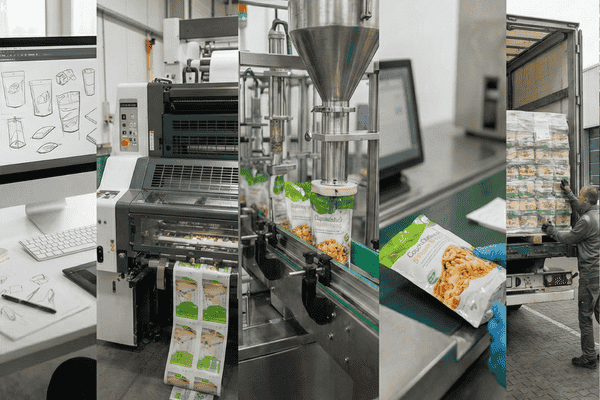
Flexible packaging workflow showing design, printing, filling, sealing, and finished products prepared for market distribution.
An overview of the flexible packaging workflow, from artwork design and printing to filling, sealing, and final market-ready products.

When comparing digital printing and gravure printing, 30,000 units per product is an absolute minimum. Below this quantity, digital printing is preferable; above this quantity, gravure printing is the better choice.

The buyer math: MOQ reality and the “break point.”

I will use the numbers you shared because they match what I see in real inquiries.

  • Digital small batch: 1,000 pieces or less, often $0.3–$0.7 per piece (depends on size and materials).
  • Traditional printing MOQ: often 30,000 pieces or more, often $0.1–$0.3 per piece (depends on size and materials).

This isn’t about “digital printing being expensive” or “gravure printing being cheap,” but rather about “using the right solution for different conditions.”

Simply put, even if we could produce a single item using gravure printing, the cost distribution would make the unit price unreasonable. We need a more reasonable budget assessment.

Table: simple decision snapshot with typical ranges

Decision pointDigital printing (typical)Gravure printing (typical)My decision bias
Quantity per SKU300–10,000 pcs30,000+ pcsMatch method to volume
Lead time to first shipmentFastSlowIf timing is tight, lean digital
SKU changesFrequentRareMany changes → digital
Unit price sensitivityMediumHighCost-driven → gravure
Inventory riskLowHighUncertain demand → digital

Lead time: what buyers really buy with digital

I do not sell digital as “better printing.” I sell it as time.

With digital, I can often skip plate making and reduce the number of approval loops. That can shorten the path from file to production. For a buyer in a fast market, that speed has a real value. It can mean:

  • faster product launch
  • faster response to competitor moves
  • faster compliance updates when labels change
  • fewer weeks of inventory sitting in a warehouse

So even if the unit price is higher, the total business outcome can be better.

My real story

I worked with an American client who changed products often based on market signals. Each packaging update used to hurt him twice. He paid for new plates, and he held leftover rolls that became useless when the design changed. He tried generic bags with labels, but the shelf look was weak, and the brand story was flat.

When he moved to digital, every new product got a unique design. Each design told a different story. He could test multiple SKUs without locking cash into 30,000 pieces each time. After one quarter of sales data, he switched the long-running winners to gravure to lower unit cost. That blend helped him raise net profit by about 3% to 5% over the quarter. I like this approach because it respects both creativity and cost.

A simple workflow I recommend

I use a two-stage workflow for many buyers:

Stage 1: Digital for validation

  • Launch with 300–3,000 pieces per SKU
  • Test demand, price points, and channels
  • Fix label and compliance details early
  • Avoid dead inventory

If you want a quick overview of what my team supports in flexible packaging, please refer to this page as a starting point: XLD’s flexible packaging capabilities.

Stage 2: Gravure for scale

  • Move the stable winners to gravure
  • Lock brand colors and repeatability
  • Lower unit price for long runs
  • Build a predictable supply plan

How I decide when to switch from digital to gravure

I do not wait for a perfect number. I watch for signals:

  • The SKU has stable monthly sales.
  • The artwork is not changing often.
  • The buyer wants consistent color across reorders.
  • The unit price becomes a real limit to growth.

When those signals appear, I push for a gravure quote and compare total landed cost. I also consider freight, because shipping high-volume packaging can shift the cost picture fast. I do not want a buyer to “save on printing” and lose more on logistics.


What Quality, Color Consistency, and Compliance Risks Should You Evaluate?

I’ve seen packaging failures not due to poor print quality, but because no one tested the entire workflow. I don’t want buyers discovering this problem only after production is complete.

Prior risks to assessment include print durability after lamination, color repeatability between different batches and substrates, and compliance with food contact and migration requirements. Digital printing can achieve superior quality, but requires rigorous color management, proper ink/substrate pairings, and clear compliance documentation to avoid costly recalls or rejections.

Quality control technician inspecting flexible packaging materials before shipment to ensure print accuracy and seal integrity.
Every batch of flexible packaging undergoes XLD’s inspection before shipment to verify printing quality, material structure, and sealing performance.

I treat quality and compliance as a checklist, not a promise. When a buyer asks, “Can digital do this?” I answer, “Yes, if we control these variables.”

Quality risk 1: scuffing, blocking, and rub resistance

Even if the print looks perfect off the press, it still has to survive:

  • lamination pressure and heat
  • roll storage and transport
  • slitting tension
  • pouch making heat and sealing
  • filling line friction
  • shelf handling

So I always ask for the end-use conditions. If the pouch will be handled a lot, I push for protective design choices, such as reverse printing or an outer protective layer. I also ask for rub tests when the application is demanding.

Quality risk 2: color consistency across reorders

Color consistency is not only “press quality.” It is also:

  • substrate variation (different film batches behave differently)
  • lamination effect (colors can shift after lamination)
  • viewing light conditions (store lighting changes perception)
  • different press calibration over time

If the buyer has strict brand standards, I will request authentic reference materials: Pantone color codes, approved print samples, and tolerance rules. If the buyer’s brand team will inspect every shade, I will not rely solely on statements like “looks about the same.”

Table: what I check before I promise color stability

Item I checkWhy it mattersWhat I ask the buyer for
Approved color targetAvoids subjective fightsPantone / LAB data
Substrate final choiceSubstrate shifts toneFinal structure info
Proof methodProof must match realityPress proof, not only PDF
Reorder controlKeeps future runs stableTolerance agreement
Lamination impactLamination can darken colorsLaminated proof sample

Compliance risk 1: food contact and migration logic

For food packaging, I do not treat “food grade ink” as a magic phrase. I ask for:

  • ink compliance statement (region-specific if needed)
  • intended contact type (direct or indirect)
  • print position (surface vs reverse)
  • barrier layer choice
  • migration risk control plan

If the product is sensitive (e.g., fatty foods, alcohol, strong-smelling products), I pay even more attention. Migration risk changes with product type and storage time.

Compliance risk 2: traceability and documentation gaps

Digital printing can support variable QR codes and batch info. That is helpful. But documentation still matters. I want the supplier to support:

  • COA / COC where needed
  • material specification sheet
  • ink declaration
  • test reports (as needed)
  • lot traceability

A buyer does not want a delay at customs or a retailer audit failure due to a single missing document.

Practical “first test” package I recommend

Before a buyer commits, I usually recommend a simple test path:

  1. Prepress review: confirm dielines, barcodes, small text, and legal copy.
  2. Press proof: check color, gradients, and fine details.
  3. Laminated sample: confirm real appearance after lamination.
  4. Basic performance tests: seal strength, rub, and visual checks.
  5. Filling line trial: confirm machine runnability if possible.

This is how I avoid expensive surprises.

When I say “no” to digital for risk reasons

I avoid digital when the buyer needs:

  • extreme durability in harsh conditions
  • specialty effects that must be perfect
  • very strict color matching across multiple suppliers
  • very large, stable volume where cost dominates

In those cases, I guide the buyer toward gravure or flexo earlier, because I would rather lose a digital order than win a complaint.

If you want to discuss a safe print method for your exact SKU, I usually ask for product type, pouch size, annual volume, target market, and timeline. Then I can recommend a path and give a clear quote plan. You can reach me here: Contact XLD.


Conclusion

I use digital printing to win speed, flexibility, and low inventory risk, and I use gravure to win cost and repeatability. The best results often come from using both in the right order.

Get Your Own Packaging

Choose XLD's experts to perfect your packaging!

Koy Wang

Koy Wang

Flexible Packaging Specialist
B2B Sales Consultant

8+ years in flexible packaging, specializing in paper-based laminates and rollstock for tea, coffee, and food brands. Supported 50+ global clients on packaging performance, cost reduction, and FDA & EU compliance. Serving brands and co-packers across North America and Europe.

8yr+ Experience
50+ Global Clients
2 Markets
About the Author

Related articles

How to Choose the Right Tea Bag Wrapper Material for Different Packaging Machines?

Read More

Surging Oil Prices in 2026: How to Reduce Your Flexible Packaging Costs

Read More

How to Choose Compostable Food Packaging Without Compliance or Shelf-Life Risks?

Read More

How to Optimize Custom Printed Rollstock for VFFS Lines Without Causing Downtime?

Read More

Chat on WhatsApp

Contact Form