
Introduction
Have you ever found yourself asking, “What kind of packaging should I choose to protect the tea and meet customer expectations?”
Many tea brands encounter issues such as aroma loss, inadequate barrier properties, vague sustainability claims, or packaging that fails to provide proper mechanical protection.
Here is my answer.
Laminated paper roll stock is an excellent choice for tea packaging. They provide outstanding preservation of freshness, great branding opportunities, and proven sustainability—all without incurring unnecessary costs.
How can I ensure the laminated paper roll stock preserves tea freshness?
To understand how to preserve tea’s freshness, we first need to understand what causes it to lose freshness.
Oxygen, moisture, airborne dust and bacteria, and finally, light—these are the main factors that affect tea’s freshness.
Laminating paper rolls utilize a multi-layer barrier structure to block oxygen, moisture, and light effectively. Customized laminated paper rolls with different material compositions can even significantly extend the shelf life of tea.
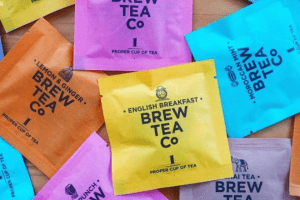
Why barrier layers matter
Every layer in laminated paper plays a role:
- Paper base: adds stiffness and good surface for printing.
- Sealant/film layers (e.g., PLA, thin PE, or other barrier films): for moisture resistance and sealing.
- Metalized or cellulosic film layers: increase oxygen/light barrier.
Table 1: Barrier Performance Comparison
| Material Type | Oxygen Barrier | Moisture Barrier | Light Protection |
|---|---|---|---|
| Paper + thin PE film | Medium | High | Low |
| Paper + PLA / Natureflex | Medium-to-High | Medium | Low-to-Medium |
| Paper + Metallized film | High | High | High |
Supporting evidence from real brands
Numi Organic Tea in the US developed a compostable overwrap for individual tea bags that uses a three-layer adhesive lamination: paper / Natureflex cellophane / non-GMO PLA. That structure, which is ASTM D6868-substantiated, delivers a strong oxygen barrier (~0.03 to 0.06 cc O₂/100 sq in./24 hr.) along with compostability in commercial composting facilities.
This shows it is possible to get good barrier performance and sustainability in one structure.
How can laminated paper roll stock support my branding?
“I need packaging that not only protects tea but also makes my brand stand out on the shelf and in marketing.”
Coated paper rolls perfectly meet this requirement. Its high plasticity allows for high-quality printing, flexible design processing, and textures or finishes (matt, glossy, smooth touch) that are consistent with the high-end tea positioning.
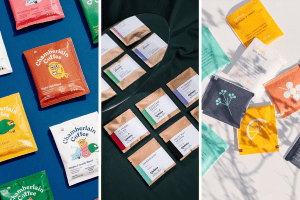
The surface of the paper base is easy to process, allowing for various printing techniques that can achieve excellent packaging effects to highlight the brand. Similar yet distinct design styles can be created for different products, ensuring consistency in brand design while creating unique differentiation.
Printing flexibility & finishes
- Flexographic printing: faster, cost-effective, good color range.
- Rotogravure / gravure: premium finishes, sharper colors, metallics.
- Surface finishes / coatings: matte, gloss, soft-touch etc., plus embossing or varnish for texture.
Explore XLD’s Printing & Design Services to discover our high-quality printing and material options.
Is laminated paper roll stock eco-friendly for tea brands?
“I worry non-sustainable packaging will harm my brand image and face regulatory or retailer backlash.”
It’s possible to create laminated paper roll stock that is compostable, plant-based, or recyclable, aligning with regulations and consumer expectations.
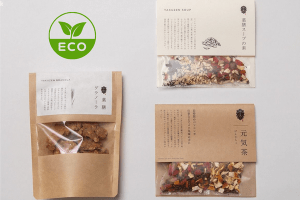
Sustainable options & real case
- Compostable structures: Numi’s overwrap with Natureflex & non-GMO PLA is ASTM D6868 compliant.
- Plant-based films / bio-resins: use of non-GMO PLA, FSC certified paper.
- Transparent labeling / 3rd party certification: compostability, FSC, etc. help with consumer trust.
Table 2: Eco Material Comparison
| Coating / Film Type | Compostable? | Recyclable? | Consumer & Regulatory Acceptance |
|---|---|---|---|
| Paper + Natureflex + PLA | Yes | No or limited | High, especially for “green” & organic brands |
| Recyclable PE laminate | No | Yes | Good for many markets, but “green” claims less strong |
| Metallized film layers | No | Very limited | Premium appearance but more challenging for recycling |
Policy and Regulatory Alignment
- ASTM D6868: Corresponding to industrial composting facility standards
- Retailer Expectations: Many retailers across the EU and North America increasingly require products to be compostable/recyclable.
- Consumer Demand: Eco-friendly packaging is a factor influencing organic tea consumers’ purchasing decisions.
How do I balance cost and performance?
“I often worry that premium materials and eco-friendly options can drive up costs, especially for small or startup tea brands.”
You can balance cost and performance by choosing a material structure that suits your product line, using shorter batches to test the market, and selecting suppliers that support flexible printing or lamination. Combining different packaging options is key.

Smart cost strategies
- Use simpler laminates for local markets.
- Use higher barrier / metalized films only for exports / premium SKUs.
- Use eco-coatings where the price premium is acceptable or supported by marketing/consumer willingness.
XLD offers rollstock with low minimum order quantities and fast turnaround (≈10 business days for rollstock), which means you do not need to commit to huge volumes before trying a design or structure.
Browse XLD’s Sustainable Packaging product line to view our Eco-coating and PLA/PBS structures.
How do I ensure compatibility with packaging machines?
“I worry that the laminated roll stock will cause jams, sealing failures, or slowdowns on machinery.”
This is not a concern. Good laminated paper roll stock can be designed for compatibility with your packaging line (VFFS, form-fill-seal, heat/cold seal), with attention to thickness, coefficient of friction (COF), sealability, and spool/core standards.
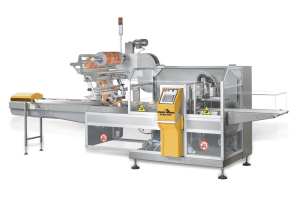
Machine fit considerations
- Material thickness must match what machines can handle (too thin → wrinkles; too thick → hard facing/slow sealing).
- Surface finish must allow proper feeding/sealing.
- Core size / roll diameter / winding direction must match your machines.
Real-Case from Numi
In the case of Numi’s overwraps, they had to ensure the compostable wrapper worked on the IMA C24 Tea Bag Packaging machine, which runs wrapped tea bags at speeds up to ~260 bags/min. They adjusted thickness etc. so the machine performance remained acceptable.
Conclusion
Choosing the right laminating paper roll is essential for tea brands to effectively protect their products’ freshness, strengthen their brand image, meet environmental standards, minimize cost risks, and ensure seamless compatibility with their machinery. In today’s competitive market, there is no better packaging material for tea bags.
At XLD, we design and supply custom laminated paper roll stock solutions that match your product’s barrier, branding, and sustainability needs. Want to explore real material samples or get a custom quote? Reach out to the XLD team now – we’d love to help your tea packaging stand out and perform.