
High Barrier Snack Packaging: How to Keep Products Crunchy Without Overengineering Costs?
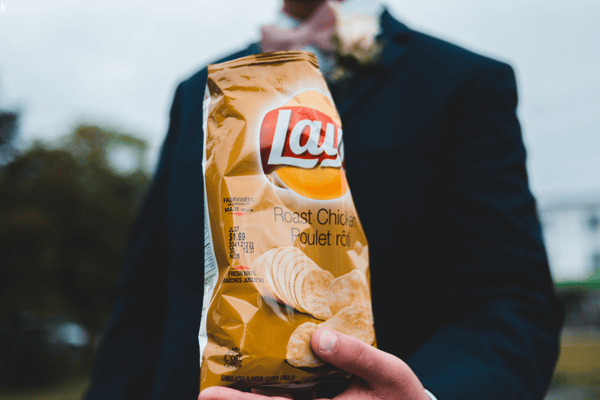
In today’s Generation Z, I often see snacks become wildly popular because of their fancy packaging designs, only to be criticized by netizens for product flaws. Such defects do far more damage to the brand than the popularity gained from the packaging.
My approach is to use high-barrier snack packaging to protect the crisp texture, and then control costs by removing or adding various packaging layers depending on the product and market. I focus on moisture absorption, oxygen exposure, and leak sealing, as these three factors determine the crispness of the snack in actual use.
Today, snack brands chase attention. AR filters on jelly packs, rocket-shaped noodle sleeves, airplane-shaped biscuits, and “crazy” flavors designed for social media. So, let’s take a look at the factors to consider when designing snack packaging.
Why Do Snacks Lose Crispness Even When High-Barrier Films Are Used?
I have opened “high barrier” bags that still felt chewy. I know how frustrating it is when the spec looks perfect but the product fails.
I’ve discovered that snacks tend to lose their crispness mainly due to gaps, minor damage, and inadequate sealing, rather than the quality of the film’s barrier properties. If moisture seeps in through the gaps, even the highest-quality barrier film cannot preserve the snack’s crispness.
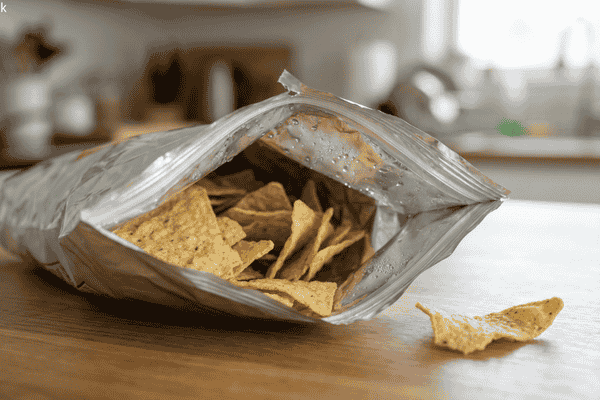
High-barrier snack packaging is not about choosing a single material; it’s about a system. Many brands, in an effort to save time, over-purchase barrier materials. However, they still receive complaints because the real failure path is not the film itself.
“Looks first” packaging can hide a “crunch last” problem
In an appearance-driven market, snack brands often compete on visuals. Limited editions, bold shapes, playful concepts, and story-driven packs get attention fast. Some products are designed to be photographed more than to be stored. That is why “outrageous” ideas spread so easily on social platforms. But one simple problem: A fun pack earns the first sale. A crunchy bite earns the repeat sale.
Brands can spend extra money on premium films, coatings, or products touted as “high barrier properties.” But if the packaging leaks, all that barrier effect is wasted. This is why some brands, despite generating traffic through highly creative marketing campaigns, receive very few positive user reviews, or even feel “speechless.”
The three real reasons “high barrier” still fails
1) Seal leakage beats barrier every time
A tiny seal channel can move more moisture than months of diffusion through a good film. The package becomes a door. Not a wall. This can happen when sealing temperature is too low, dwell time is too short, pressure is uneven, or seal contamination is present (salt dust, oil mist, powder).
2) Micro-pinholes and flex damage destroy the barrier layer
Some barrier layers are sensitive to stress. Creases, folds, drops, and transport vibration can create micro paths. Even metallized layers can lose performance if the metal layer is damaged or if conversion creates defects.
3) Pack geometry and headspace speed up staling
A bag with large headspace holds more moist air. Small packs often have a higher surface-area-to-product ratio. They can go stale faster than large packs, even with the same structure.
What to check before upgrading the film
The fastest cost win usually comes from fixing the process first, then choosing the minimum barrier that works.
| Market symptom | Most likely root cause | What to test first | Fix that often saves cost |
|---|---|---|---|
| Some bags stale fast, some stay crisp | Seal variation, contamination | Seal strength + dye leak test | Widen sealing window with better sealant resin |
| Crunch fails only in humid regions | WVTR target is too relaxed for route | Climate simulation + pouch WVTR | Upgrade WVTR only for those SKUs/markets |
| “High barrier” still tastes old | OTR too high for oil level | Sensory + oxidation screening | Upgrade oxygen barrier only for high-fat SKUs |
| Stale even with strong film | Handling damage, pinholes | Flex/pinhole inspection | Improve converting controls, winding tension |
Packaging pressures on Generation Z
The “viral snack” era creates two pressures at the same time:
- More SKUs and more design changes.
- More extreme pack shapes and shelf impact.
Both pressures increase packaging risk. More changeovers increase the chance of a sealing or conversion mistake. More creative structures increase the chance of damage. That is why the smartest packaging plan is not “maximum barrier.” It is “right barrier + strong seals + stable converting.”
Metallized PET vs. AlOx Films: Which Barrier Level Is Actually Necessary?
I’ve seen brands spend a lot of money on high-barrier packaging for their products, resulting in a significant increase in their final costs. That’s a complete waste of money, and it can be avoided!
When choosing between metallized PET and alumina plastic, the first step is to clarify the customer’s actual needs for the snacks: Do I need high moisture resistance or high barrier properties? I won’t buy alumina plastic simply because it has “higher barrier properties.” The right fit is the perfect fit.
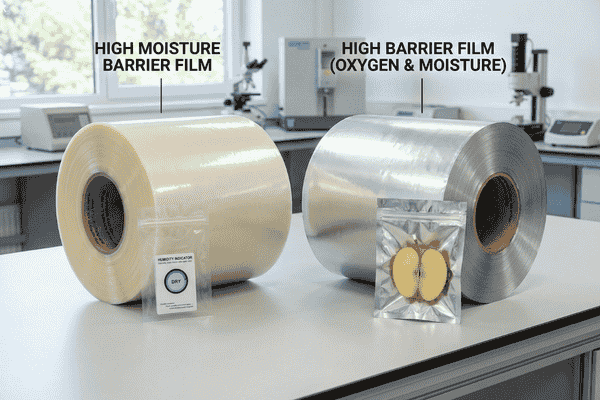
Metallized PET (MetPET) and AlOx-coated films can both deliver strong barrier performance. The key is to match barrier level to shelf life and route, then match the material to real converting behavior and brand goals. After all, no single material can meet all requirements.
Start from the job, not the material
Ask these questions first:
- Is the snack’s main failure moisture softening or oxidative rancidity?
- Does the product need to be visible in the pack?
- How long is the route and how hot/humid is the storage?
- How sensitive is the product to oxygen because of oil content?
If visibility is not needed, a metallized structure can often win on cost and stability. If visibility is a key selling point, AlOx can justify its premium.
Where metallized PET usually wins
MetPET is often the practical choice when:
- oxygen control matters (nuts, high-fat snacks, premium chips)
- the brand accepts a non-transparent, premium metallized look
- the converting line runs PET laminations reliably
- cost needs control without “foil-level” overengineering
MetPET also offers a familiar workflow for many converters. That reduces risk. In snack packaging, reduced risk is real savings. A lower defect rate is often more valuable than a slightly lower material cost.
Where AlOx usually wins
AlOx is often worth it when:
- the snack must be clear for marketing reasons
- the pack is positioned as premium, and visibility supports trust
- the oxygen target is tight, and shelf life is long or route is harsh
- the brand wants a “metal-free” visual style
The trade-off is that AlOx coatings are thin. They can be sensitive during conversion. If the line is not controlled well, leaks and loose seals can easily occur in the finished product packaging..
Table: MetPET vs AlOx from a buyer’s view
| Decision factor | Metallized PET (MetPET) | AlOx-coated film |
|---|---|---|
| Visibility | Not transparent | Transparent |
| Typical barrier strength | High oxygen + good moisture | High oxygen + good moisture |
| Conversion stability | Often stable in many lines | Needs tighter control to protect coating |
| Cost tendency | Often lower | Often higher |
| Best-fit SKUs | Nuts, premium chips, longer routes | Premium snacks where “see-through” sells |
The “foil trap” and why it still shows up
Many teams still default to foil laminates because foil feels like certainty. The problem is that foil can be overkill for the supply chain reality. Many snacks do not need multi-year barrier. They need months. Overengineering increases:
- material cost
- lamination steps
- weight and logistics cost
- risk of waste if designs change
In a market full of limited editions and fast-moving trends, overengineering increases the cost of obsolescence. A “perfect barrier” bag that ends up unused is the worst barrier choice.
A simple selection logic that avoids overpaying
A practical method looks like this:
- Decide if the SKU needs visibility.
- Decide if oxygen is the first limiter (high-fat) or moisture is the first limiter (most crispy snacks).
- Choose the simplest structure that passes real pouch tests.
- Spend remaining budget on sealing stability and QA.
If a brand wants a short list of proven structures and a trial plan, it helps to work with a supplier who can propose options and test them quickly. If you are looking for references on related products, you can find XLD’s packaging solutions here.: XLD’s packaging markets.
What Production-Line Problems Do High-Barrier and High Moisture-Barrier Films Create, and How Do You Fix Them?
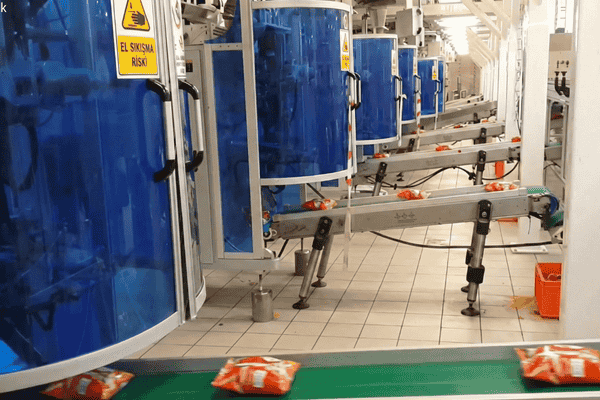
I have seen the same film perform perfectly in a lab, then fail on a VFFS line at speed. The barrier was fine. The runnability was the problem.
I’ve learned that high-barrier snack packaging often causes line issues such as narrow sealing windows, poor hot tack, slipping or blocking, static, curl, coating cracks, and lamination defects. I solve them by tuning sealant choice, sealing settings, web handling, and QC—before I ever “upgrade barrier.”
High barrier and high moisture-barrier films are often stiffer, more layered, or more surface-sensitive than standard films. That can make them less forgiving on the production line. The good news is that most problems have clear fixes when you treat them as process issues, not mysteries.
Problem 1 — Narrow sealing window and weak hot tack
What happens:
High barrier structures can seal inconsistently. Operators raise temperature to “make it seal,” then the film distorts, seals burn, or the pack wrinkles. At high speeds, weak hot tack can cause seal bursts when product drops into the bag.
Why it happens:
Sealant layer is too thin or too stiff
SIT (seal initiation temperature) is too high for line speed
Oil or dust contamination sits in the seal area
Pressure/time are not balanced
How I fix it (cost-effective first):
Choose a sealant with a wider sealing window (better flow and hot tack).
Increase dwell time slightly before raising temperature.
Add a simple seal contamination control step (air knife, cleaning, dust control).
Validate seal strength with real product drop tests, not only flat seals.
Problem 2 — Blocking, poor slip, and web feeding instability
What happens:
High moisture-barrier films, especially with certain coatings or high slip packages, can block in the roll or slip too much on the forming collar. The film may wander, wrinkle, or misregister.
Why it happens:
Surface chemistry changes with coatings, corona level, or slip additives
Storage conditions cause roll blocking
COF is outside what the machine prefers
Winding tension is not stable
How I fix it:
Set a COF target range that matches the line (not “as low as possible”).
Control roll storage temperature/humidity and roll aging time.
Adjust winding tension and nip settings to reduce blocking risk.
Use consistent corona treatment levels and verify them at incoming QC.
Problem 3 — Static buildup and product sticking
What happens:
Film attracts dust, salt, seasoning, or product fines. That contamination reduces seal quality and creates rejects. Static can also cause poor stacking or feeding problems.
Why it happens:
Low humidity environments increase static
Some high barrier surfaces build charge easily
Film speed and friction increase static
How I fix it:
Install or tune anti-static bars and grounding points.
Manage local humidity where practical.
Reduce friction points and improve film path design.
Add a simple “seal area cleanliness” control step.
Problem 4 — Metallized or coated layer damage during converting
What happens:
Metallized layers can get micro-cracked under stress. AlOx coatings can develop micro defects if flexed or processed aggressively. The pouch still looks good, but barrier drops and shelf life collapses early.
Why it happens:
High tension and sharp bending radii
Aggressive lamination conditions
Inconsistent web handling
Poor roll handling in transport
How I fix it:
Reduce tension peaks and improve tension control loops.
Avoid sharp rollers and tight wrap angles.
Use protective coatings or primers when needed (only if they solve a proven issue).
Require pouch-level barrier verification on first production runs.
Problem 5 — Ink adhesion and lamination bond issues
What happens:
Print scuffs, delaminates, or shows tunnel defects. This can happen even when barrier numbers are excellent. Then the pack fails visually or mechanically.
Why it happens:
Surface energy is not stable (corona decay, contamination)
Ink system not matched to coating/metallized surface
Adhesive chemistry not tuned for the structure
Cure time or lamination settings are off
How I fix it:
Confirm surface energy targets at print and before lamination.
Use primers only when needed, and qualify them with rub tests.
Choose adhesives matched to metallized/coated surfaces.
Validate rub resistance after lamination, not before.
Table: Line problem → root cause → fix
| Line problem | Typical root cause | Quick fix | Long-term fix |
|---|---|---|---|
| Seal leaks at speed | Narrow sealing window, contamination | Adjust dwell/pressure; clean seal area | Better sealant resin + sealing SOP |
| Wrinkles and web wandering | COF mismatch, tension instability | Tune tension, guides | Set COF spec + stable winding |
| Blocking in rolls | Storage + slip package + tight winding | Improve storage; reduce tension | Anti-block strategy + roll QC |
| Static and dust pickup | Low humidity, friction | Add anti-static bars | Improve film path + grounding |
| Barrier drops in real pouches | Coating cracks or micro defects | Reduce tension and bend stress | Pouch-level WVTR/OTR QC gates |
| Print scuff / delamination | Surface energy and adhesive mismatch | Retune corona/primer | Full print-laminate qualification |
A practical “do not overengineer” workflow
When a buyer tells me, “We need higher barrier,” I do not start by adding layers. I start by asking:
Are we failing due to film diffusion or due to leaks and line instability?
Do we have pouch-level WVTR/OTR, not only flat-film data?
Can the line seal this structure consistently at target speed?
If you want to reduce both risk and cost, I recommend a simple trial plan:
Run a short pilot on the actual line speed.
Test seal strength and leakage on real filled packs.
Check pouch-level WVTR/OTR on first articles.
Adjust process first, then upgrade barrier only if needed.
Teams looking for help to translate this content into precise specifications and test plans are welcome to contact us directly. All you need to do is click “contact” in the upper right corner.
Conclusion
High-barrier snack packaging should provide the minimum barrier properties required for practical application while maintaining a crisp texture. A strong seal and clever design are more effective than expensive, overly designed ones. You don’t actually need such advanced packaging materials if the machines and films work well together.
External links (3):
- Water activity and snack texture (crispness vs water activity): https://aqualab.com/market-insights/water-activity-snack-foods/
- Packaging materials data example for metallized OPP barrier improvement: https://pubs.acs.org/doi/pdf/10.1021/bk-2000-0753.ch001
- Technical reference on AlOx barrier coatings and performance targets: https://www.svc.org/clientuploads/directory/resource_library/13_373_W13.pdf