Short Answer
Oil-linked PE and PET resin prices have surged 20–32% since early 2026 due to Strait of Hormuz disruptions. Switching to paper-based flexible packaging for dry goods like tea and snacks helps you decouple packaging costs from crude oil volatility and meet tightening plastic regulations.
Surging Oil Prices in 2026: How to Reduce Your Flexible Packaging Costs
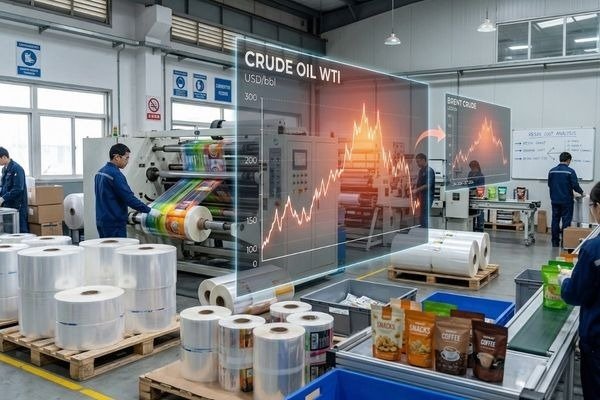
If you source flexible packaging from China, you already feel the pain. Between 9 March and 31 March 2026, Chinese domestic resin suppliers raised prices three times—PET and nylon each jumped roughly ¥2/kg, totaling over a 32% increase in under a month. Worse, suppliers now demand cash before delivery, and even with payment confirmed, shipments are just sitting there. Some suppliers have outright canceled orders, returning double deposits rather than honoring contracted prices.
I’ve watched this unfold in real time from our production lines. This article lays out exactly how Strait of Hormuz tensions translate into the resin prices you’re quoted, why paper-based packaging is no longer a “nice-to-have” sustainability play but a hard-nosed cost strategy, and how to find the right Chinese supplier to execute that transition without disrupting your filling lines.
How Does the Situation in the Strait of Hormuz Directly Affect the Spot Prices of PE/PET and Other Plastic Particles?
Most B2B buyers understand that plastic films come from petroleum. Fewer understand the specific transmission mechanism that turns a naval standoff in the Persian Gulf into a doubled quote on your stand-up pouch order. Here is the chain, link by link.
The Supply Chain: Crude Oil → Naphtha → Monomer → Resin → Your Pouch
Roughly 20–21% of global seaborne crude oil passes through the Strait of Hormuz daily, according to the U.S. Energy Information Administration (EIA). When Iran-related conflict escalates and tanker insurance premiums spike, Brent crude reacts within hours. But the downstream effect on packaging resin is not instant—it follows a staggered timeline:
| Stage | Typical Lag After Crude Spike | What Happens |
|---|---|---|
| Brent crude oil | Day 0 | Spot price jumps on futures markets |
| Naphtha (cracking feedstock) | 1–2 weeks | Asian naphtha CFR Japan rises in tandem |
| Ethylene / PTA monomers | 2–4 weeks | Petrochemical plants reprice output |
| PE / PET / Nylon resin pellets | 3–6 weeks | Converters and traders raise asking prices |
| Your packaging quote | 6–10 weeks | Manufacturer passes through new material costs |
Why China’s Domestic Market Reacted Even Faster
Here is something most overseas buyers don’t realize: China’s resin spot market is partially speculative. When traders anticipate sustained increases in crude prices, they hoard inventory. This is exactly what happened in March 2026.
From our direct purchasing experience: Between 9 March and 31 March, PET and nylon resin prices surged over 32% across three separate hikes—roughly ¥2 per kilogram each. Suppliers shifted to a strict cash-before-delivery model. Even after wiring payment, our procurement team faced multi-day waits because warehouses were rationing releases. Several of our upstream resin suppliers canceled confirmed orders outright, preferring to pay double-deposit penalties rather than ship at the old price—because reselling on the spot market at the new price was far more profitable.
This is not normal market friction. It is a structural dislocation that signals prices may not retreat quickly even if geopolitical tensions ease, because restocking cycles will sustain demand for months.
What This Means for Your 2026 Packaging Budget
According to ICIS, every $10/barrel increase in crude oil drives PE and PET resin costs up by $0.05–$0.08 per pound, adding $6,000–$9,600 in annual costs for mid-volume film consumers per price cycle. With Brent crude exceeding $95 and geopolitical instability in Hormuz, procurement teams relying on outdated quotes are working with invalid financial data. For more analysis, visit ICIS.
In the Current Context, Paper-Based Packaging vs. Plastic Packaging?
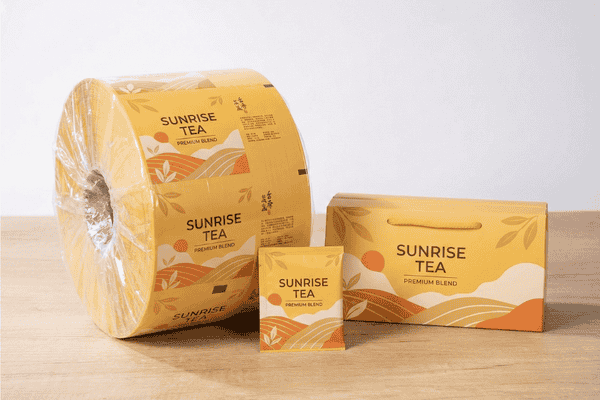
The gut reaction from many packaging engineers when someone suggests “switch to paper” is skepticism—and historically, that skepticism was warranted. Paper couldn’t match plastic on barrier performance, moisture resistance, or machine compatibility. But the 2026 cost landscape, combined with genuine breakthroughs in coating technology, has changed the calculus.
Let me be direct: paper-based packaging is not a universal replacement for plastic. It is a strategic replacement for specific product categories—and if your product falls into those categories, ignoring paper right now is leaving money and regulatory compliance on the table.
Head-to-Head: 2026 Cost and Performance Comparison
| Dimension | Paper-Based (Bio/Nano Coated) | Traditional Plastic (PE/PET/Nylon) |
|---|---|---|
| Raw material cost trend (2026) | +15–25% vs. 2023, but stabilizing | +20–32% since early 2026, still climbing |
| Oil price sensitivity | Low — wood pulp and paper are not petroleum-derived | High — direct petrochemical derivative |
| Moisture barrier | Good to excellent (with nano water-based coatings) | Excellent (inherent property) |
| Oxygen barrier | Moderate to good (coated); may need foil for >18-month shelf life | Excellent (especially with EVOH or aluminum layers) |
| Regulatory trajectory | Aligned with EU Packaging and Packaging Waste Regulation (PPWR), China’s plastic restrictions, Southeast Asia bans | Increasing taxes, extended producer responsibility fees, and outright bans in key markets |
| Consumer perception | Positive — “recyclable” and “compostable” drive premium positioning | Increasingly negative, especially in EU and APAC |
| Machine compatibility (VFFS/HFFS) | Requires testing; newer nano-coated papers run well on modern lines | Proven, established parameters |
| Total cost stability over 12 months | High — predictable, less volatile | Low — subject to ongoing oil-driven spikes |
The Non-Consensus View: Paper Is Now Cheaper for Certain SKUs
Here’s the industry insight that most articles won’t tell you: for dry goods packaging with a target shelf life under 18 months—tea, coffee drip bags, granola, dried spices, powder supplements—nano water-based coated paper is already at cost parity or cheaper than petroleum-based plastic films when you factor in total landed cost plus compliance fees in the EU market. The reason is simple math. When you add the EU’s plastic packaging tax of €0.80/kg on non-recycled plastic packaging, the “cheaper” plastic pouch becomes more expensive than its paper-based alternative. Most procurement spreadsheets still don’t include this line item.
Which Products Should Switch Now—and Which Shouldn’t
Strong candidates for paper-based transition:
- Tea bags and tea sachets (dry, low moisture risk)
- Single-serve drip coffee bags
- Dried herb and spice sachets
- Granola and cereal bar wrappers
- Powder-form supplements in stick packs
Not yet suitable for paper-based replacement:
- Liquid-fill pouches (sauces, soups, beverages)
- Frozen food packaging requires extreme cold-chain durability
- Retort pouches for shelf-stable wet foods
- Products requiring >24-month shelf life without aluminum foil
If your product lands in the first list, please keep reading. The next section explains how to execute the switch without disrupting your production.
How to Use Paper-Based Packaging to Replace Plastic Packaging?
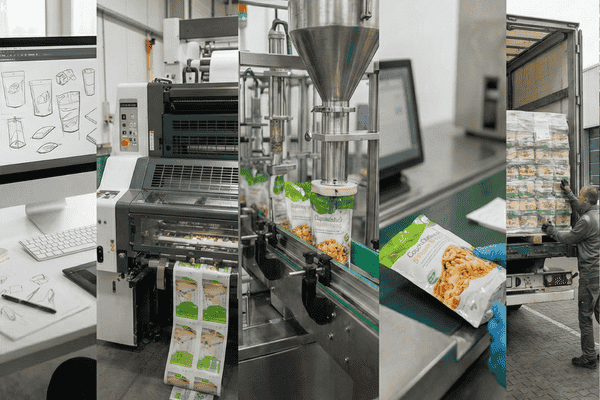
Knowing paper is viable is one thing. Another is executing a material transition without wrecking your filling line efficiency, shelf life, or brand presentation. Here is the practical playbook, drawn from real-world production-floor experience.
Step 1: Precisely Define Your Barrier Requirements
Before requesting any samples, record the following product parameters:
- Product type: Dry solid, powder, granule, or liquid-adjacent (e.g., moist tea)?
- Target shelf life: Under 12 months, 12–18 months, or 18+ months?
- Primary threat: Moisture ingress, oxygen exposure, UV degradation, or aroma loss?
- Storage conditions: Ambient, refrigerated, or variable (e.g., e-commerce shipping)?
This determines which paper-based coating technology you need:
| Coating Technology | Moisture Barrier | Oxygen Barrier | Compostable? | Best Application |
|---|---|---|---|---|
| Uncoated kraft paper | Poor | Poor | Yes | Outer wraps, non-food secondary packaging |
| PE-coated paper | Excellent | Moderate | No | Budget applications where recyclability isn’t required |
| PLA/PBAT bio-coated paper | Very good | Good | Yes (industrial compost) | Eco-brands targeting EU/APAC markets |
| Nano water-based coated paper | Excellent | Good–Excellent | Yes (recyclable + compostable) | Premium tea, coffee, dried food — best 2026 option |
| Paper + aluminum foil laminate | Best | Best | No | Long shelf life (>24 months), export markets with no eco mandates |
Step 2: Run Machine Compatibility Trials—Don’t Skip This
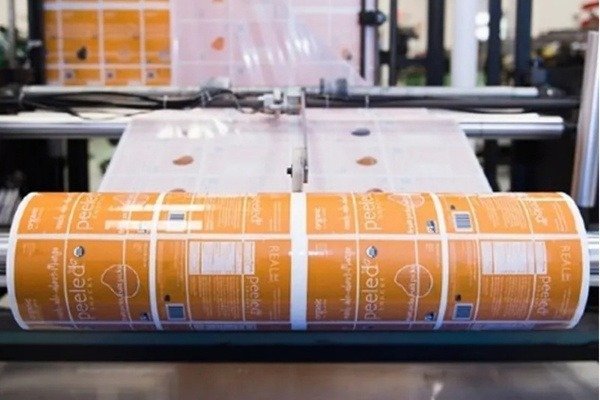
This is where I’ve seen brands waste months and tens of thousands of dollars. Paper-based films behave differently than plastic on VFFS and HFFS machines. The friction coefficient, stiffness, and heat-seal window are all different.
Critical trial checklist:
- Run at least 500 meters of the candidate material on your actual filling machine
- Test at 3 different seal temperatures (paper-based films typically need 10–15°C higher seal temps)
- Measure jam frequency per 1,000 cycles
- Inspect seal integrity under vacuum (for nitrogen-flush applications)
- Confirm print registration holds on paper substrates (paper stretches differently than PET)
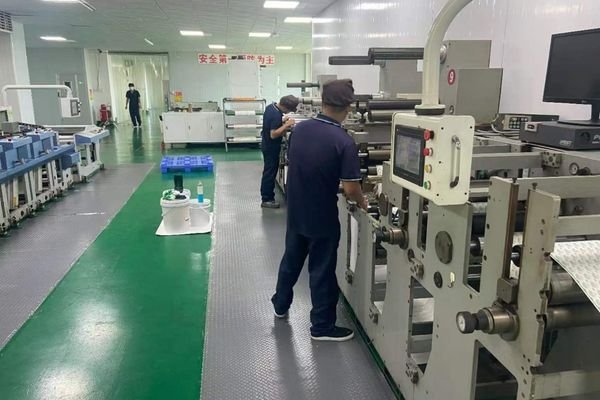
If you don’t have in-house filling equipment, ask your packaging supplier to coordinate trials at their facility. At our factory, we routinely run pilot batches of 500–1,000 pouches on our VFFS lines so clients can validate material performance before committing to a full production order. This step alone has saved multiple customers from costly rollbacks. For more details on how material structure affects machine performance and cost, our guide on <How to Optimize Custom Printed Rollstock for VFFS Lines Without Causing Downtime? >, which analyzes in detail the problems and solutions most buyers encounter.
Step 3: Optimize Structure to Offset Material Premium
Paper-based materials are currently 10–20% more expensive per kilogram than commodity PE/PET films. But smart structural engineering can claw back 10–20% of that premium:
- Right-size the paper grammage. Many suppliers default to 80gsm kraft. For tea sachets, 50gsm nano-coated paper provides adequate performance at lower material cost.
- Eliminate redundant layers. If your current plastic pouch uses a PET/AL/PE trilayer for a 12-month shelf life tea product, a single-layer nano-coated paper may deliver equivalent results at lower total material weight.
- Optimize pouch dimensions. Reducing a tea sachet outer envelope by even 5mm per side, across 100,000 units, saves meaningful material volume.
- Redesign secondary packaging. Paper pouches are stiffer than plastic; they palletize differently. Work with your manufacturer on carton configurations that reduce void space and cut freight costs.
Step 4: Phase the Transition—Don’t Go All-In on Day One
A staged approach de-risks the switch:
| Timeframe | Action | Volume Target |
|---|---|---|
| Month 1–2 | Request samples; run machine trials; test shelf life | 0% (R&D phase) |
| Month 3–4 | Produce first commercial pilot batch; gather customer feedback | 10–20% of SKUs |
| Month 5–8 | Scale to primary SKUs; negotiate fixed-price paper pulp contracts | 30–50% of SKUs |
| Month 9–12 | Full transition for suitable product lines; communicate sustainability story to market | 70–100% of eligible SKUs |
How to Find Suitable Paper-Based Packaging Suppliers in China?
In 2024, China achieved remarkable progress in energy production, reaching 3.486 billion tons of oil equivalent, while consumption reached 4.172 billion tons, resulting in a self-sufficiency rate of 83%. As the world’s largest exporter of flexible packaging, China has stable energy sources and is self-sufficient. This makes China a reliable and stable paper packaging supplier, ensuring the safety of your packaging and brand. Therefore, selecting a qualified supplier within China is crucial. Here are some methods to confidently identify qualified suppliers and avoid wasting your valuable time.
What to Look For in a Qualified Supplier
Non-negotiable capabilities:
- In-house coating line or verified coating partner. Ask specifically: “Do you coat paper in-house, or do you buy pre-coated stock?” Factories that control coating can adjust barrier properties and respond faster to specification changes.
- Paper-specific printing experience. Printing on paper substrates requires different ink systems and tension controls than printing on BOPP or PET. Ask for paper-printed samples with fine detail and consistent color density.
- Food-contact compliance documentation. Request FDA 21 CFR or EU Regulation (EC) No 1935/2004 certificates for their paper and coating materials. Many Chinese factories have plastic certifications but lack paper-specific food-contact approvals.
- Trial batch capability. You need a supplier willing to produce 1,000–5,000 units for validation before you commit to a 50,000-unit order.
Red Flags to Watch For
- Claims of “same machine, same process” for paper and plastic. Paper-based pouch making requires adjusted tension, temperature, and speed settings. A factory that dismisses this is cutting corners.
- No paper pouch samples available. If they can only show you plastic samples and promise paper “will work the same,” walk away.
- Resistance to third-party testing. Any credible factory should welcome SGS, Intertek, or Bureau Veritas audits.
- Unusually low pricing. In the current market, if a quote for nano-coated paper pouches comes in cheaper than commodity PE pouches, something is wrong—likely a substandard coating that will fail moisture barrier testing. For example, the price of ordinary PE coated paper is about 26 RMB/kg, but the price of nano-coated paper needs to be increased by 10-15%.
Sourcing Channels That Work
| Channel | Pros | Cons |
|---|---|---|
| Canton Fair (Phase 2 – Packaging) | See physical samples; meet factory owners directly | Twice per year only; travel cost |
| Alibaba / Made-in-China | Wide selection; instant communication | Heavy filtering needed; many traders posing as factories |
| Industry referrals | Pre-vetted; higher trust | Limited to your network |
| Specialized packaging sourcing agents | Handle factory audits and QC | Agency fee adds 3–8% to cost |
| Direct outreach via LinkedIn / industry forums | Targets specific capabilities | Time-intensive |
Why Locking In a Supplier Now Matters
Remember what I described at the start of this article: Chinese resin suppliers are canceling orders and demanding cash upfront. The paper market, while more stable, is not immune to broader supply chain stress. Factories that secure bulk paper pulp early in the year have locked in pricing. Those that didn’t are passing volatility to you.
The practical move: establish a relationship with a qualified paper-based packaging manufacturer now, agree on a fixed pricing window of 3–6 months, and begin pilot production. Waiting until Q3 or Q4 2026 means competing for capacity with every other brand scrambling to de-risk from plastic.
For more information on how to evaluate flexible packaging suppliers and avoid common purchasing mistakes, please contact us to obtain our supplier qualifications, best practices for requesting quotes, and CIF cost calculations.
Ready to De-Risk Your Packaging Costs from Oil Volatility?
The numbers are clear: petroleum-based resin prices are structurally unstable in 2026, and every month of delay increases your exposure. Paper-based packaging for tea, coffee, and dry goods is technically mature, increasingly cost-competitive, and aligned with where global regulations are heading.
Your next step: Send us your current packaging specifications—product type, pouch format, target shelf life, and monthly volume. Our engineering team at XLD will provide a side-by-side cost analysis of your current plastic structure versus a paper-based alternative, including material costs, coating options, machine trial support, and a transparent landed cost estimate with current 2026 pricing.
No guesswork. No outdated quotes. Just accurate numbers so you can make a decision that protects your margins.
[Contact XLD for a free paper-based packaging cost analysis →]